
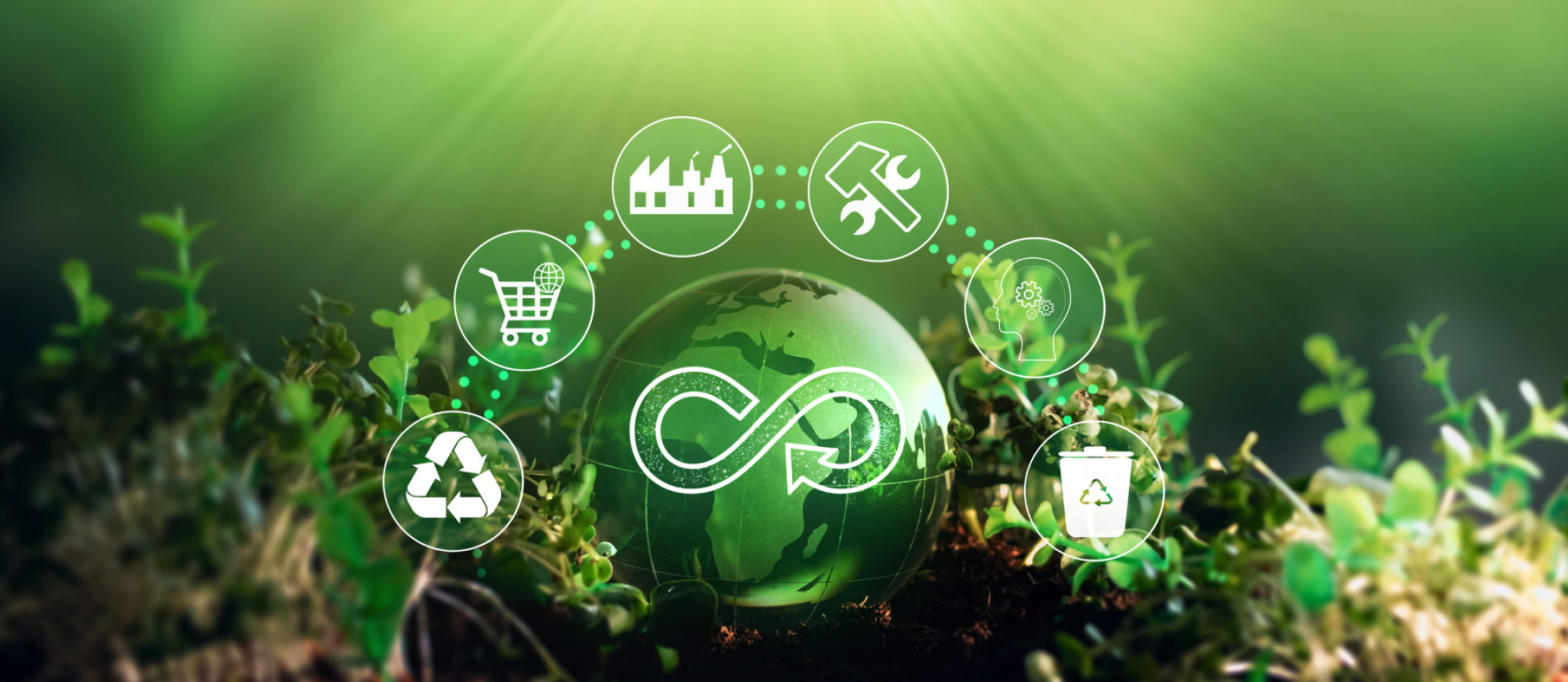
The age-old practice of composting, wherein organic materials undergo decomposition to yield nutrient-rich soil additives, serves as a quintessential embodiment of the circular economy concept. This intricate process underscores the crux of a circular economy, emphasizing the recycling and regeneration of materials as pivotal components for sustaining production in an ecologically harmonious manner.
An additional historical precedent, elucidating early recycling endeavors, manifests in the re-smelting of metals—a sophisticated technique deployed centuries ago. This method involved the melting down of metallic items, followed by reshaping them into novel products, thereby significantly prolonging the material’s life cycle.
Esteemed by proponents of sustainability, the circular economy posits a utopian ideal wherein materials are perpetually recycled, fostering a sustainable and environmentally conscious trajectory. Despite the fervor surrounding this concept, detractors often dismiss it as excessively idealistic, questioning its practical feasibility.
This article ventures into an in-depth exploration of why the circular economy philosophy emerges as the preeminent avenue towards an authentically sustainable utopia. It delves into the potential role of circular economy principles in propelling a zero-waste energy transition, fortified by scientific evidence and astute analyses. Furthermore, it delineates strategic approaches to transmute this visionary concept into a palpable and transformative reality, weaving together scientific acumen and environmental pragmatism.
Circular Economy in Nature: A Harmonious Model
In the intricate dance of natural processes, cycles unfold seamlessly, with all by-products serving as inputs for subsequent processes, leaving nothing wasted. Plants exemplify this efficiency, using CO2, fixing nitrogen into the soil, replenishing their growth environment, while microbes decompose plant matter, enriching topsoil for new flora.
Efforts to emulate nature’s circular economy inspire contemporary sustainability initiatives. Nature inherently orchestrates the cyclic processing of carbon, nitrogen, and water. The timescales for these cycles vary, ranging from days to thousands of years.
The Carbon Cycle, relatively rapid, spans decades to centuries. Nitrogen, with a longer timescale, transforms through processes like nitrification and denitrification. The Water Cycle, encompassing days to millennia, orchestrates the movement of water through various reservoirs.
A common thread in these cycles is their waste-free nature, achieving sustainability effortlessly—a stark contrast to current human practices. Building our world with built-in recyclability and sustainability could align us with nature’s harmonious balance.
Unprecedented Waste Generation: A Call for Circular Solutions
The driving force behind the circular economy movement stems from the vast waste and pollutants resulting from human technological growth. Microplastics now infiltrate ocean trenches, smog blankets vast atmospheric expanses, and carcinogens pervade biodiversity.
Global waste production stands at two billion tonnes annually, fueled by reckless consumption and mismanagement of finite resources. Population growth plays a role, but it is the misuse of resources that propels this planetary predicament.
Understanding Waste: Its Types and Impact
Waste manifests as municipal solid waste, plastic waste, electronic waste, and food waste, with packaging and textiles dominating plastic waste. Municipal solid waste, prominently food (44%), confronts the average person daily.
Developed nations lead in waste generation but employ advanced processing, steering toward eco-conscious practices. A shift from decades of “out of sight, out of mind” waste exportation signals a global push for local, eco-friendly waste management.
The Culture of Waste: Origins and Impacts on the Carbon Cycle
A century of “use and throw” culture has ingrained irresponsible consumption globally, especially impacting the carbon cycle. Electricity, heat, and transport contribute to 73.2% of global greenhouse gas emissions, with individual actions, like frequent flying and daily driving, amplifying carbon footprints.
Is there hope? Corporations wield significant pollution responsibility, but public actions still matter. While certain industries drive pollution, individual choices can contribute positively to the carbon cycle. The key lies in reducing carbon footprints, fostering closed-loop material cycles to the furthest extent technologically possible.
Governments and corporations are:
- Shifting towards renewable energy sources and reducing their dependence on fossil fuels.
- Catching on to new and effective trends in sustainability, and updating policies and legislation.
- Encouraging and incentivising circular economy amongst entire industries.
- Promoting sustainable agriculture and forestry practices that sequester carbon in soil and vegetation.
- Investing in waste management and recycling. This includes an increase in R&D budgets.
What You can do as an individual:
- Watch out for sustainable and environmentally-conscious products.
- Buy from companies that prioritize sustainability or turn waste into new products.
- Inspire and persuade political representatives, corporations, and businesses to adopt environmentally-conscious practices.
- Reduce energy consumption by using energy-efficient appliances.
- Begin composting your food waste.
- Avoid air travel for short-distances.
- Support reforestation and other carbon sequestration initiatives.
- Use public transportation, carpool with friends and family, or bike instead of driving.
Circular economy strategies that reduce and eliminate waste:
Designing-out waste and pollution: Designing products and processes with the goal of minimizing waste and pollution, and ensuring that materials and resources are used efficiently.
EPR Legislation: Extended Producer Responsibility mandates that manufacturers recover their end-of-life waste products from consumers and additionally utilize recycled material from end-of-life products to manufacture new goods.
That’s why India’s Battery Waste Management Rules (BWMR 2022) are a great example of circular economy legislation that mandates exactly that. If EPR could be applied to entire economies, the impact would be significant.
Reduce, Reuse, Recycle: Follow this classic maxim to extend the life of products through repair, reuse, and recycling, and reducing the need for virgin raw materials.
Regenerating natural systems: Regenerating ecosystems and restoring soil health, play a key role in mitigating climate change by sequestering carbon.
Relying on renewable energy: The energy transition to renewable energy sources such as solar, wind, and hydro power, and reducing reliance on non-renewable energy sources that contribute to greenhouse gas emissions.
How are we currently trying to move away from the carbon cycle?
Alternative ways of storing and delivering energy are gaining traction, led by Lithium-ion batteries. But these too have created environmental and humanitarian crises like our previous technologies. What’s worse is that we seem to have just created another one-way stream, thus continuing to generate a lot of waste.
That’s where Li-ion battery recycling can serve as a ticket to a sustainable energy future given the fact that battery raw materials are unchanged in composition after a battery is dead.
Our battery material recycling and extraction process recovers 95% of Li-ion raw materials from end-of-life cells, at 50% lower CO2e versus mining.
Conclusion
By taking inspiration from nature and adopting a circular economy approach, we can create a clean and green planet by reducing waste, conserving resources, mitigating the impacts of climate change, and augmenting the natural processes that regulate ecological cycles.
Thus, the circular economy is also an indispensable driving force behind the world’s energy transition. Going closed-loop maximizes the life, value, and availability of battery raw materials for renewable energy storage.
Everyone from individuals to corporations and governments can contribute in the efforts towards the creation of a realists’ utopia on Earth. We hope that this overview has inspired you, and reminded you that you can make a difference, no matter where or who you are.
Stay tuned to our blog for more sustainability, battery energy, energy transition, circular economy, and battery recycling!
Together, let’s make circular economy the new normal!